
Wildlife
| conflict reduction, grizzly bears, Wolves, Working Wild Challenge
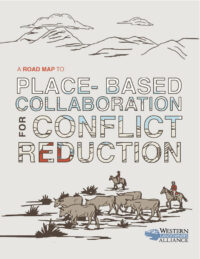
A road map to place-based collaboration for conflict reduction
Place-based collaborative groups offer a means to coordinate community-scale action to address wildlife-livestock conflicts, and processes to lift landowner and livestock producer needs, while finding areas of agreement and shared…
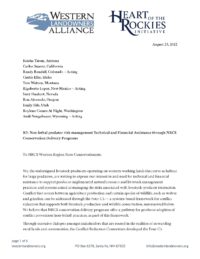
Letter to NRCS Re: Non-lethal predator risk management
In this letter signed by hundreds of producers from around the West, we ask USDA’s Natural Resources Conservation Service staff to consider “technical and financial assistance to support producer-implemented natural…
| Working Wild Challenge
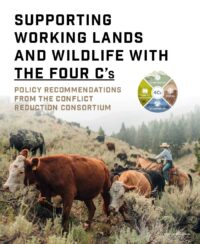
Supporting Working Lands and Wildlife with the Four C’s
Policy Recommendations from the Conflict Reduction Consortium Across the western US, iconic wildlife like elk, deer, grizzly bears, and wolves share lands with humans and their livestock. This comes with…
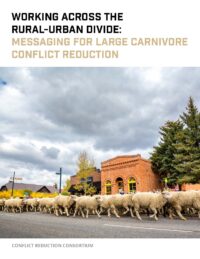
Working across the rural-urban divide: Messaging for large carnivore conflict reduction
Conflicts between large carnivores and livestock can be polarizing. The words used around large carnivore-livestock conflict reduction can either further polarize a sensitive situation or bring people together in a…
Redefining Conservation for the 21st Century
Our roadmap to a conservation model that works for rural America, working lands and wildlife. Conservation as usual isn’t working. We are literally losing ground and natural resources every day.…
| Policy, Working Wild Challenge
Working Wild Challenge Policy Recommendations
Working lands stitch together the patchwork of land ownership that creates the character of the American West – open space, valued by both people and wildlife. Many rural communities have…
Collaborative Wildlife Migration Corridor Workshops
This report provides an overview of the latest efforts towards migration corridor management in each of the three states, and reports findings from the workshops. The report summarizes the discussion by workshop participants about what is working in their state, as well as opportunities to improve migration corridor management and conservation.
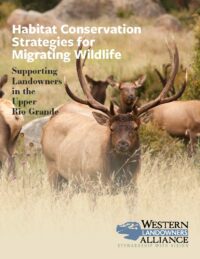
Habitat Conservation Strategies for Migrating Wildlife
Landowner perspectives gained through one-on-one interviews and focus groups throughout the Upper Rio Grande region provide the foundation for the recommendations contained within this toolkit. These perspectives are shared side-by-side with concise strategies for policymakers, funders, and organizations looking to improve wildlife habitat in this dynamic trans-boundary region of Colorado and New Mexico.
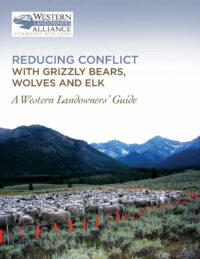
Reducing Conflict with Grizzly Bears, Wolves and Elk
In this guide, WLA offers the collective knowledge and hands-on experience of over 30 land, livestock and resource managers constructively engaged in one of the greatest conservation challenges of our time: how to share and manage a wild, working landscape that sustains both people and wildlife.
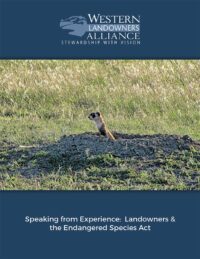
Speaking from Experience: Landowners & the Endangered Species Act
This informative guide on the Endangered Species Act provides essential information on the law itself, changes currently being proposed and perspectives from experienced landowners.
Featured Publication
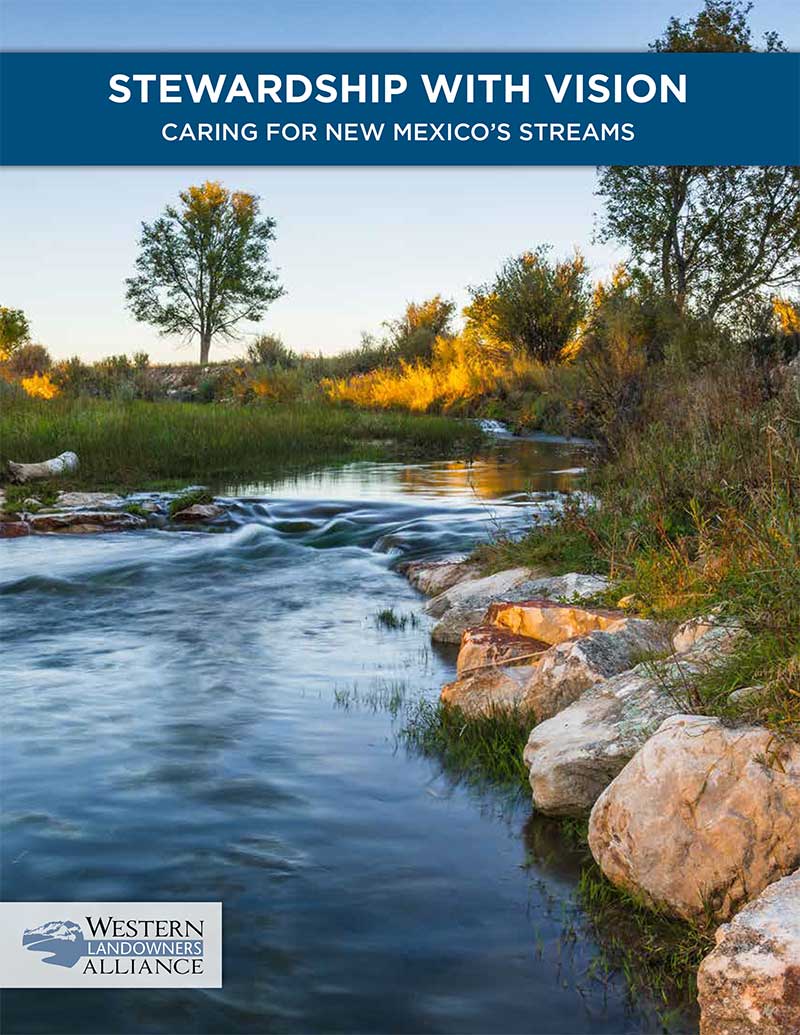
Stewardship with Vision: Caring for New Mexico’s Streams.
Private stewardship of Western land and water plays a vital role in the health of the West. This must-read guide highlights the importance of New Mexico landowners to our economic and environmental future. Our food, water resources, forests, rangelands, and fish and wildlife populations depend on their stewardship. Public policies that support and encourage the voluntary stewardship of our shared resources benefit us all.
©2026 Western Landowners Alliance • PO BOX 27798, Denver, CO 80227 • 505.466.1495
Western Landowners Alliance is a 501 (c)(3) non-profit recognized by the IRS.
Tax ID: 46-1346488