
Wildlife
Getting started with birding
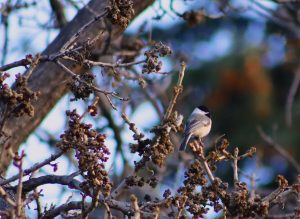
It takes practice to get good at bird identification, but it’s never too late to start! The COVID-19 induced pause plus the start of spring creates the perfect opportunity to get into birding. Even if you can’t go anywhere that’s ok – there are birds right out your window. Here are some resources to help you learn!
Read More...USDA Wildlife Services to Use $1.38M to Implement and Study Nonlethal Predation Management
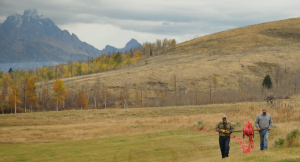
Congress appropriated $1.38M to Wildlife Services FY20 budget to support the program’s nonlethal predator damage management activities. WS will distribute the appropriation to 12 states, chosen based on existing and potential conflict between large-carnivore predators and livestock.
Read More...Greg Hertel and his airedale terriers

Greg Hertel has used Airedale terriers for several years to protect himself, family and staff from grizzly bears by keeping them away from livestock and buildings around their Cody, Wyoming ranch. The Airedales sound a particular bark when they smell or see a grizzly bear, and are let out of their kennel to run the bears off the ranch.
Read More...Wyoming’s budget session generates new opportunities for the working wild
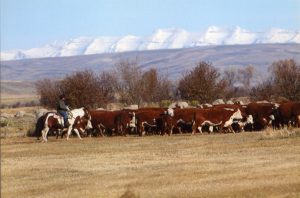
Wyoming’s 2020 Legislative Budget Session ended on March 12. There was legislation that passed this session, which provided a couple of new opportunities for livestock producers who are being impacted by issues related to wildlife.
Read More...A lens on the seasons on Lonetree Ranch
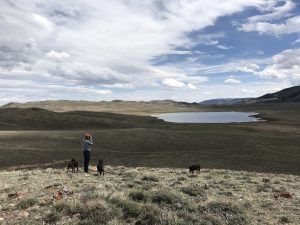
Hello from Southwest Wyoming! I would say it is my favorite time of year, but I think I say that at the change of each season. This past year we…
Read More...My role on Montana’s Grizzly Bear Advisory Council
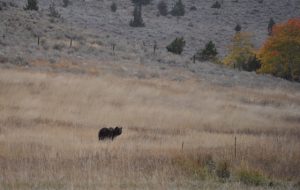
The 18-member Grizzly Bear Conservation and Management Advisory Council of Montana citizens has a big job between now and its August 2020 deadline. With four the eight scheduled council meetings have now taken place, this a good time to share my impressions of the work so far, and the important tasks that lie before us.
Read More...Birds Got no Beef with Burger
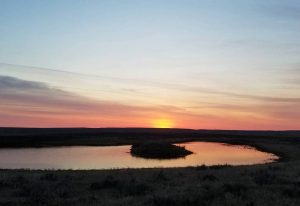
Opening the pickup door and stepping out onto native grass, the sun begins to rise amidst the sound of the dawn chorus. I listen to the melodic tinkling of a Baird’s sparrow (my favorite song, and also set as my morning phone alarm); the downward whirl of the Sprague’s pipit (my ring tone); the buzz of the Brewer’s sparrows, the joyful couplets of the McCown’s longspur. The chestnut-collared longspurs are chasing each other in play, or fight.
Read More...Waterton Biosphere Reserve’s Carnivores and Communities Program
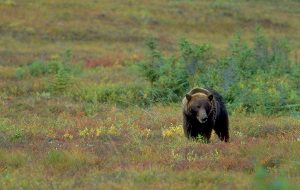
The Waterton Biosphere Reserve’s (WBR’s) Carnivores and Communities program operates in four municipalities, two of which are within the boundaries of the Waterton Biosphere Reserve in Canada. The program focuses on proactive management to decrease conflict between people and carnivores, especially bears and wolves, within the agricultural community of Southwestern Alberta. It is well funded and effective, and it is a major WBR program.
Read More...Hunters Helping with Wildlife Management on Private Lands
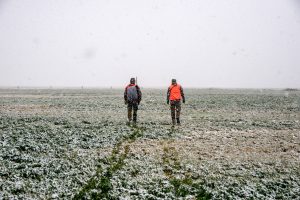
In its third year, the Master Hunter Program educates and certifies qualified hunters, and provides landowners with a pool of competent, ethical and responsible hunters to draw from when weighing options to manage wildlife populations on their land, and considering who to allow on their property to hunt.
Read More...An Old Tool Protecting New Calves
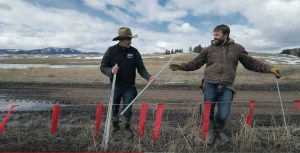
A tool originally developed for hunting wolves is a non-lethal option for protecting livestock from them, through a public-private partnership in big sky country.
Read More...