PUBLICATION

Screenshot 2025-09-03 at 8.47.39 AM

Staff contact

Publication Date

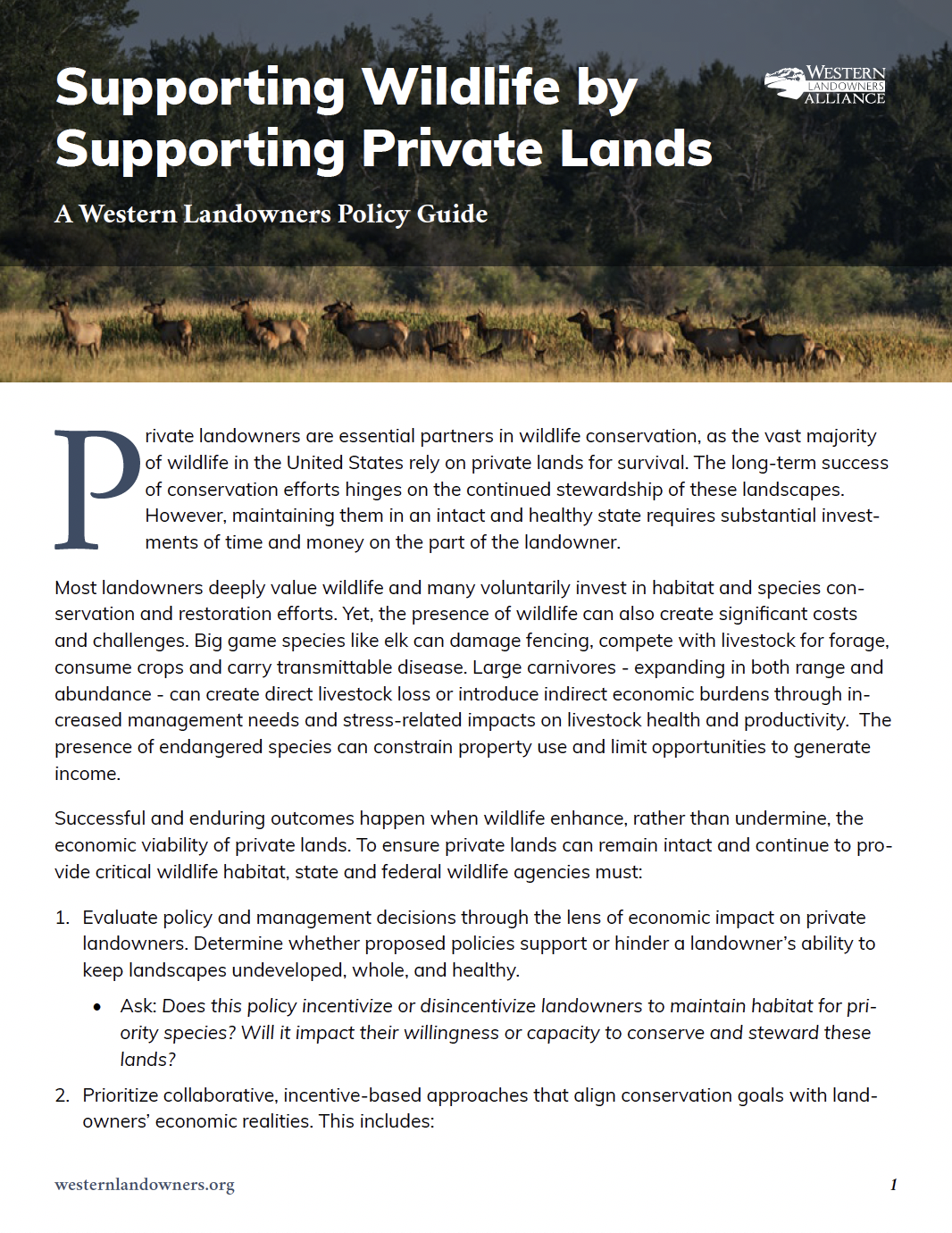
Supporting Wildlife by Supporting Private Lands

A Western Landowners Policy Guide

Don’t make land or conservation policy without consulting the flowchart in this document!

Private landowners are essential partners in wildlife conservation, as the vast majority of wildlife in the United States rely on private lands for survival. The long-term success of conservation efforts hinges on the continued stewardship of these landscapes. However, maintaining them in an intact and healthy state requires substantial investments of time and money on the part of the landowner. 

Successful and enduring outcomes happen when wildlife enhance, rather than undermine, the economic viability of private lands. To ensure private lands can remain intact and continue to provide critical wildlife habitat, state and federal wildlife agencies must follow several basic principles, which this 2-page guide conveniently lays out.
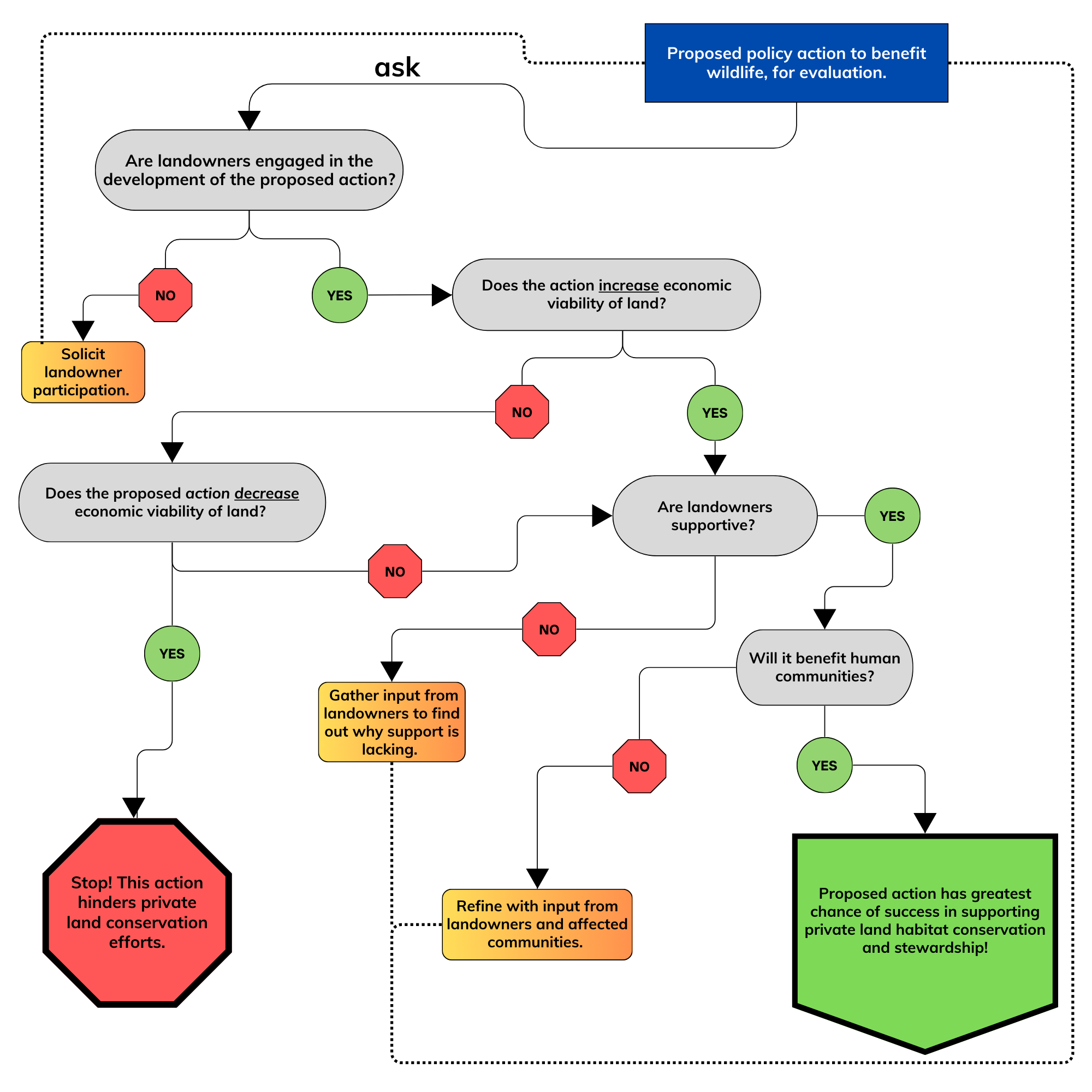
Download above to view the flowchart at full size.

The Western Landowners Alliance and the authors reserve all copyrights on publications posted on our website unless otherwise noted. Please contact us for reprints or for special use requests.

Rock Weirs

Rock weirs are structures that act to slow water down in streams or ditches, decreasing erosion and creating habitat. Weirs offer low-tech solutions to issues that can plague landowners as they manage water crossing their land, and can be a powerful management tool. The strategic addition of rocks to streambeds creates turbulence and drag, which slows water down, reducing its capacity to carry sediment and erode the land. Weirs have been used as a water management tool for thousands of years, but the early 1900s saw a rise in their use for habitat and stream restoration.

Wolf Location Sharing: Finding Common Ground

Wolf Location Sharing: Finding Common Ground tackles one of the biggest challenges in wolf conservation and livestock management across the American West: how to share wolf location information in ways…

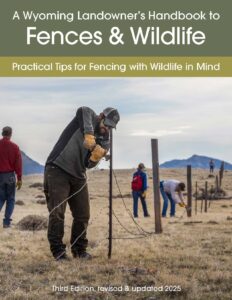
A Wyoming Landowners Handbook to Fences and Wildlife, Third Edition (2025)

In this vital guide’s third edition, revised and updated in 2025, and published by the Wyoming Game and Fish Department, building effective yet wildlife-friendly fencing is beautifully illustrated and clearly explained.

Building Trust

A guide for agencies working with producers to reduce wildlife conflicts Wildlife conflict on working lands can strain relationships between livestock producers and wildlife agencies, making trust crucial for conflict…

Wyoming-USDA Big Game Conservation Partnership Impact Report

A Partnership to Conserve Big Game Habitat in Wyoming. The roots of the Partnership were built from a Wyoming initiative that engaged stakeholders in conserving both wildlife migrations and the…

Restoring America: WLA’s Federal Policy Recommendations

Rural Economies • Land • Wildlife As landowners and land managers, we recognize that well-managed working lands are the cornerstones of both human communities and the ecosystems on which we…

Reducing Risk on the Range: Non-lethal Practices for Managing Carnivore-Livestock Conflicts

Non-lethal predation risk management practices, including range riding, carcass management,electric fencing/fladry, and associated practices can be incorporated into livestock productionsystems to benefit both agricultural operations and wildlife. These practices: This…

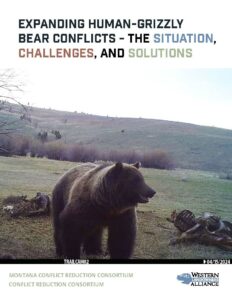
Expanding Human-Grizzly Bear Conflicts: The Situation, Challenges and Solutions

Grizzly bears are expanding their ranges into historic habitats outside of recovery zones, and much of the expansion is happening on private working lands and the urban wildland interface. Western…

Range Riding Producer Tool Kit

Range riding is a long-used and flexible practice, making it a beneficial conflict reduction tool for use in diverse, ever-changing western landscapes. The overarching goal of range riding for predator…

Electric Fencing Producer Tool Kit

Fencing, turbo fladry and electric drive over mats are tools that can be used to deter conflict through exclusion of large carnivores and/or containment of livestock. These temporary, semi-permanent or…

Never miss a new publication or resource from Western Landowners Alliance.

It's important to be prepared for what's in front of you. Western Landowners Alliance produces vital resources from and for landowners on topics as critical and varied as public policy, economics, and stewardship best practices. Subscribe to our email list to ensure you are always in the loop.

GET UPDATES DELIVERED TO YOUR INBOX

Click Here to Popup our Membership Form!

* We don’t share your personal info with anyone. Check out our Privacy Policy for more information.

©2025 Western Landowners Alliance • PO BOX 27798, Denver, CO 80227 • 505.466.1495 
Western Landowners Alliance is a 501 (c)(3) non-profit recognized by the IRS.
Tax ID: 46-1346488